Sette Cama was a lodge that I had been aware of for a while but was slightly under the radar here in the UK. I had not spoken to many people who had fished there and although it seemed a fascinating place it was only when I visited another African Waters lodge in Lesotho in December last year that I made up my mind to visit. About nine months later, along with a small group, I flew from Paris to Libreville looking forward to learn more about what seemed like a very different sort of fishing destination.
There can be something formulaic about many international fishing holidays, often out of necessity as the moving parts in these trips can be a logistical nightmare for operators and staff. It is also generally a good thing. People spending a lot of money and time want to know exactly what they are getting before they sign up. Sette Cama follows these rules up to a point, with set arrival and departure days and so on. However, there was a pleasing element of flexibility and surprise too. This was my first time in Gabon and fishing Sette Cama. It is a fascinating place. I had done some research beforehand, not just on the fishing and lodge but also the Loango National Park, also known as ‘Africa’s last Eden, which we would be exploring and fishing in. This is a fishing trip, and an exciting and productive one, but we also had the option of walks through the forest to search for chimpanzees and gorillas and along the coast to look for surfing hippos. The fishing also offered variety, and the guides and lodge staff were very flexible with the schedule, arranging fishing time and meals to fit in with the best tides, rather than having a rigid programme.
We arrived at Libreville International airport in the evening. The arrival process was straightforward. We had our yellow fever vaccination certificates checked and then met with the African Waters ‘fixer’ who assisted us with getting our visas. We had made our applications prior to departure (a very straightforward process) so this was swift and within around 20 minutes we all had visas, an entry stamp and collected our luggage. Exciting the airport, we met our driver who took us to the hotel we had booked for the night, a short drive away. We had chosen one of the recommended hotels and the rooms were spacious and comfortable. Dinner was excellent. There were a few things that were slightly disappointing, particularly the lack of any breakfast the following morning, but there are other hotels to choose from, and this might be something we investigate further in the future!
One thing that some people seemed concerned about is the safety aspect of this trip but our experience in Libreville both on arrival and departure was very smooth. The people were friendly and non-threatening and none of us suffered from any issues such as upset stomachs, annoying insect bites or worse. The lodge environment was quite remote although there are a couple of small settlements in the area. There are biting insects but they were not an issue for us, and the rooms have mosquito nets and aircon. to avoid night time bites.
The following morning, we were transferred back to the airport for the private charter to Gamba airport. Again, this was a smooth process. We left from the military hangar and had our bags and ourselves weighed before getting on board the large plane. We had plenty of space to stretch out and the luggage allowance was a generous 25kgs plus hand luggage. The flight was 50 mins and before too long we were landing at the small regional airport. Here we were met by the team from the lodge who loaded us into vehicles for the ten-minute drive to the small dock where we embarked on two boats for the one-hour trip to the lodge. Our bags were taken by road to the lodge, a slightly longer journey. Although this seems like quite a process every step of the journey is so interesting that that the morning passed very quickly. We even saw elephants on the short drive from Gamba to the boats!
The lodge is situated at the water’s edge, overlooking the lagoon. It is a well-established site; originally a hunting camp several decades ago it now caters to fishers and eco-tourists outside the fishing season. There is a main lodge building with the bar, dining and sitting areas and the rooms are all separate cabins a short walk away. Once we had disembarked the boats we were shown to our rooms and then we gathered for lunch. We all had our own rooms, which were spacious and had en-suite bathrooms. The beds had comfortable bedding, mosquito nets and there were aircon units.
After lunch we got together on the lodge veranda while the guides set up our equipment. We all set up two 9 weight rods for fishing the lagoon in the morning. One with a floating line and a popper and one with an intermediate line. We also set up a 12 weight each, with an intermediate line. This was for afternoon and evening fishing at the river mouth, where it meets the ocean. Most of us had ordered fly packs from the lodge and in fact you could turn up with nothing at all, they had rods and reels available to hire and a small but well-equipped tackle shop.
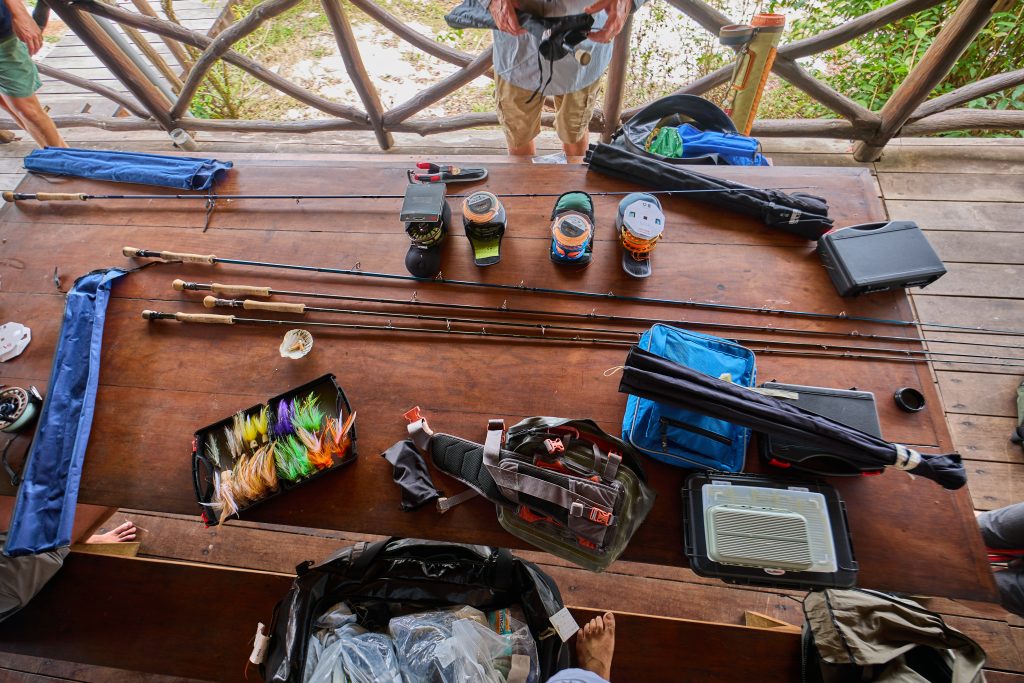
The trip consists of seven nights at the lodge, with six full days fishing and an afternoon and evening session on arrival. It is best to arrive feeling fully refreshed because the week can be exhausting, albeit in a good way! The fishing each day was split into two sessions. The timings can be quite variable, depending on the tides. The guides will be as flexible as possible to give you the best chance to catching fish, even if it means not finishing fishing until 1am! During my visit, our morning session was from 5.30am (leaving the lodge) to around 10am and then 4.30pm to around 9pm. Although there was also an evening session from 9pm to 1am for two nights, as an experiment.
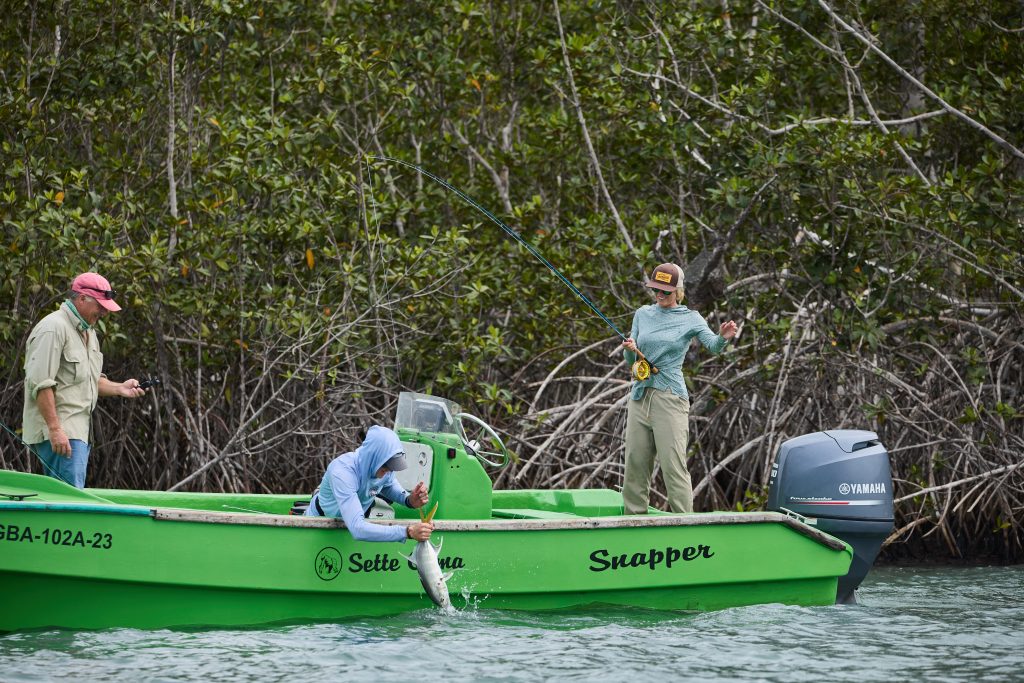
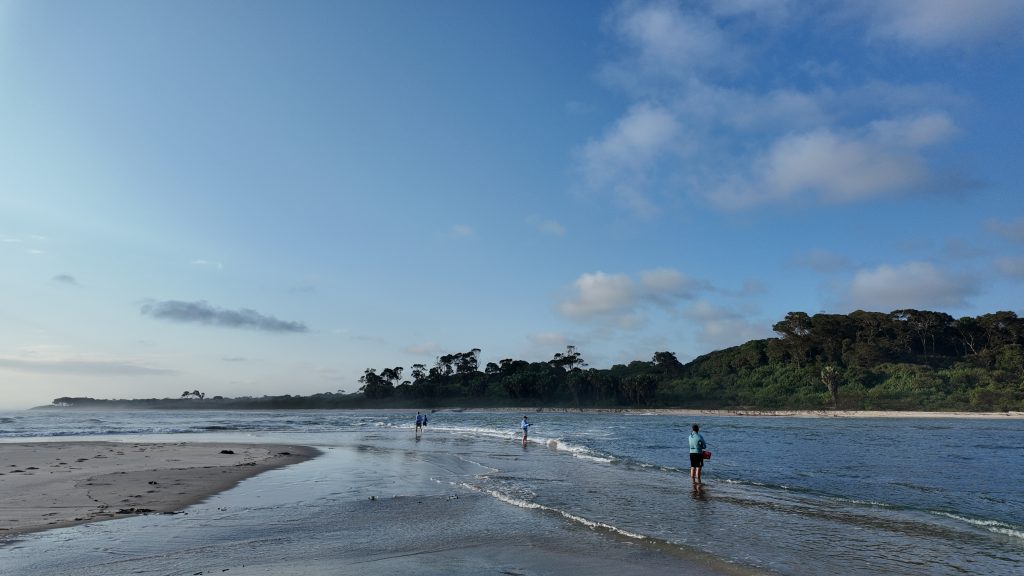
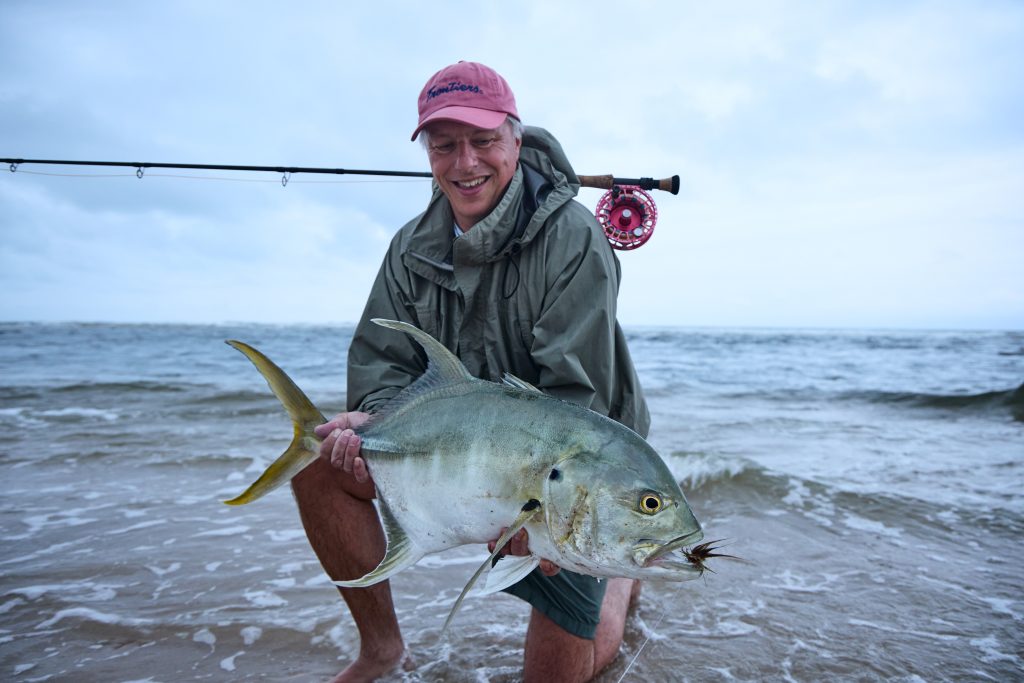
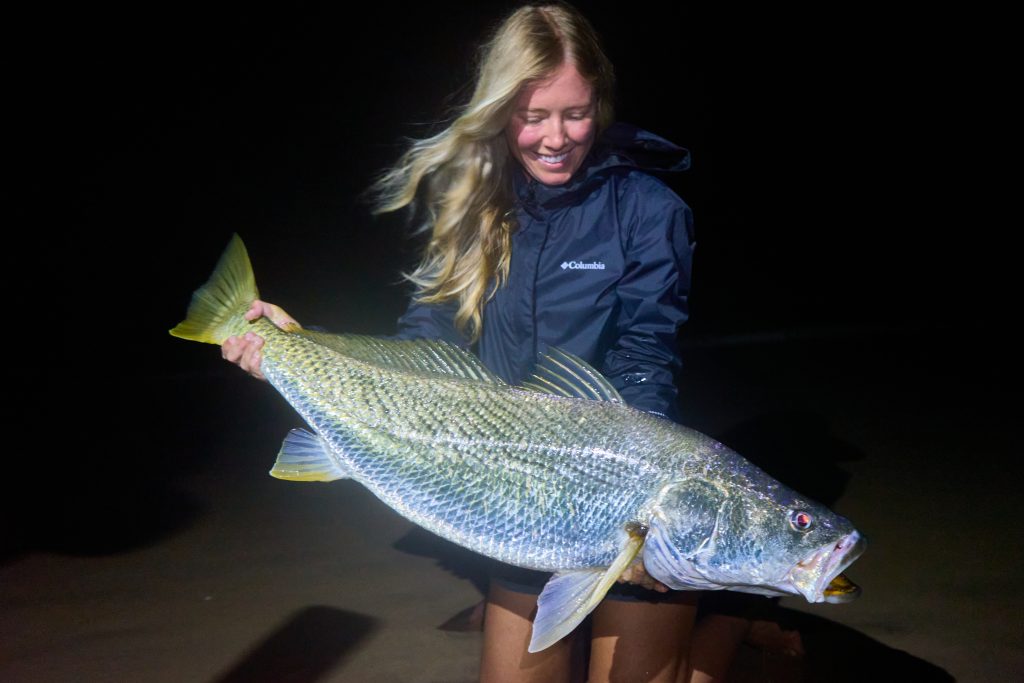
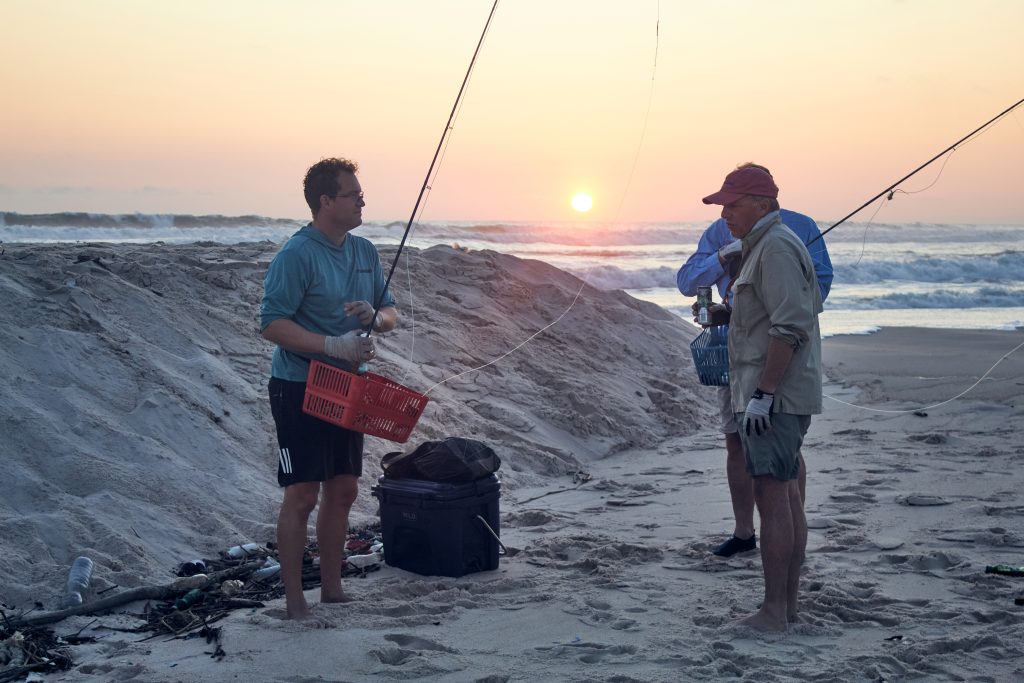
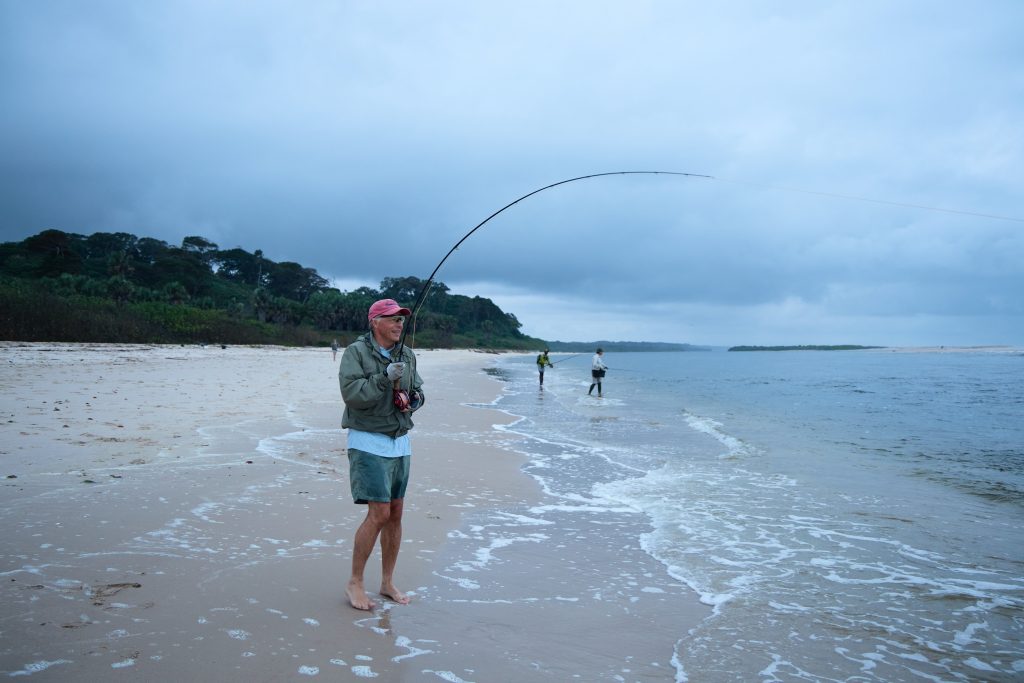
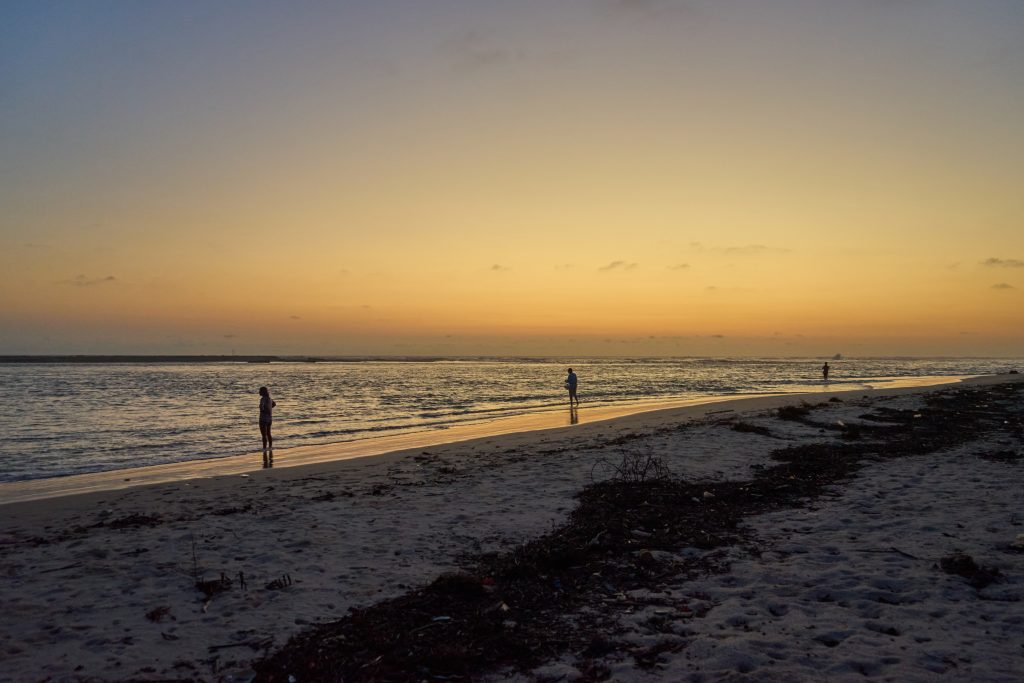
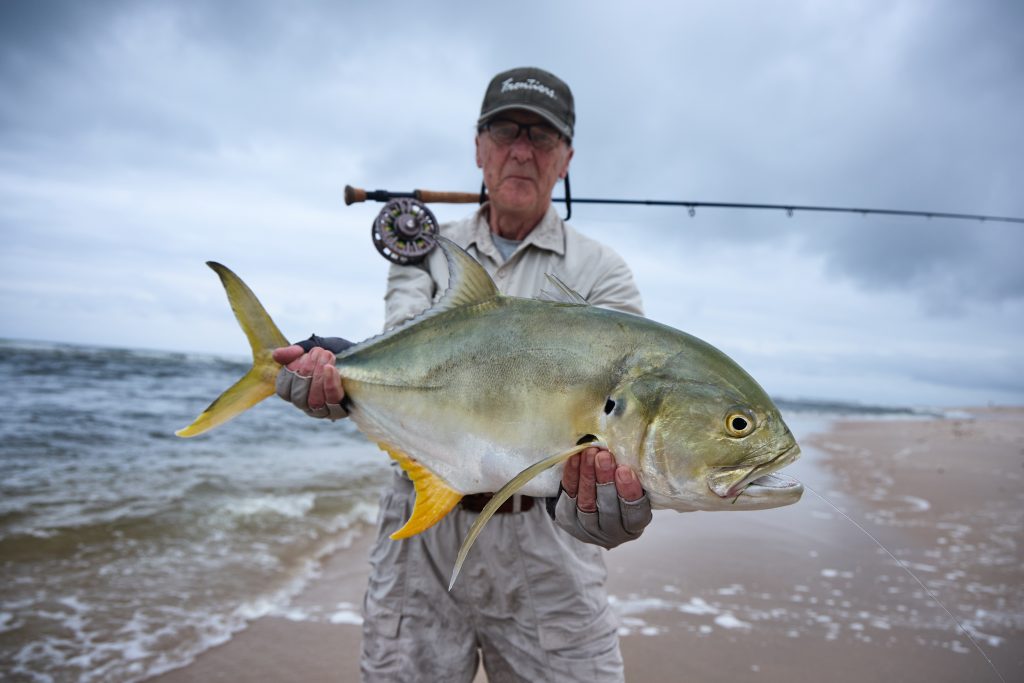
The morning sessions were based around fishing the lagoon, from the river mouth all the way up to the lodge and above. We fished from spacious pangas which two people can fish from simultaneously. Two fishers share one guide and panga. The fishing was particularly exciting at first light as large groups of jacks attacked schools of mullet. However, there were plenty of other fish to catch too, including large snappers. The afternoon and evening sessions were completely different. We all went together in the boats to the mouth of the river. We would then all (six fishers, two guides plus two boatmen) spread out along either the north or the south bank and fish from the beach edge into the river and into the surf where the river met the sea. The river mouth is a beautiful sandy area and although the sea was rough it was surprisingly not windy at all. This is when we needed the 12 weights, and we were very much geared up in case we crossed paths with a tarpon. On arrival we were fishing for jacks hunting bait fish, very visual and exciting fishing, so you could also use a 9 or 10 weight then. As it got dark the target was anything from tarpon to snappers, kob or African threadfin. We were on a fly fishing only week but on a couple of occasions some of the group did fish with bait and caught some enormous bull sharks.
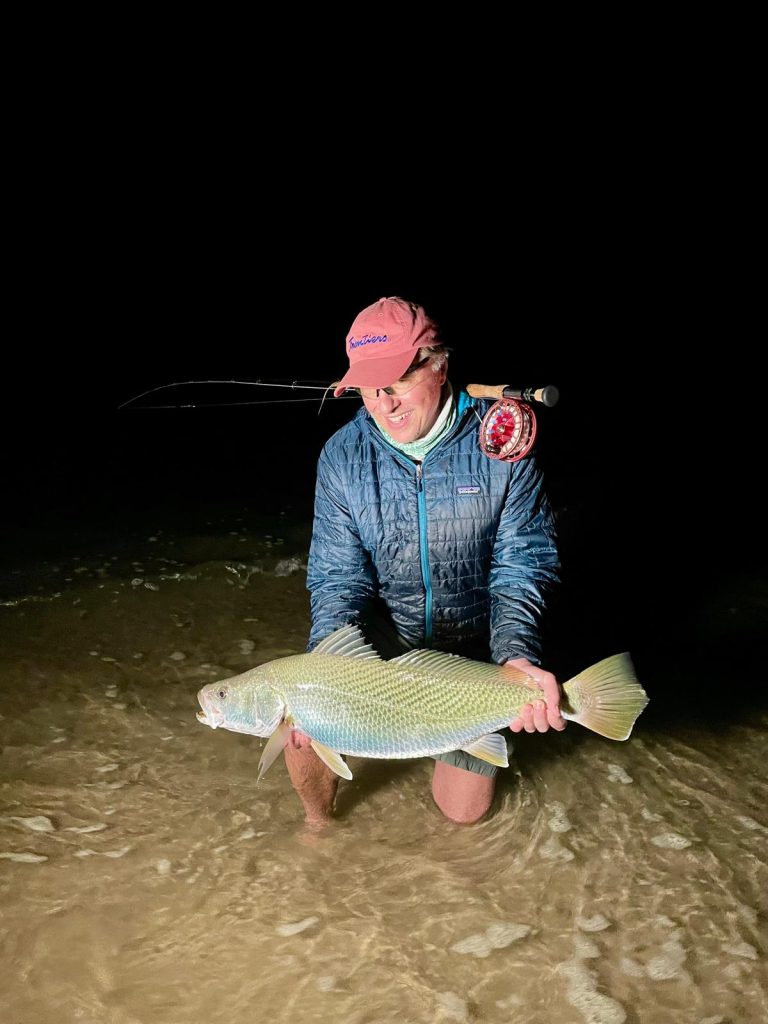
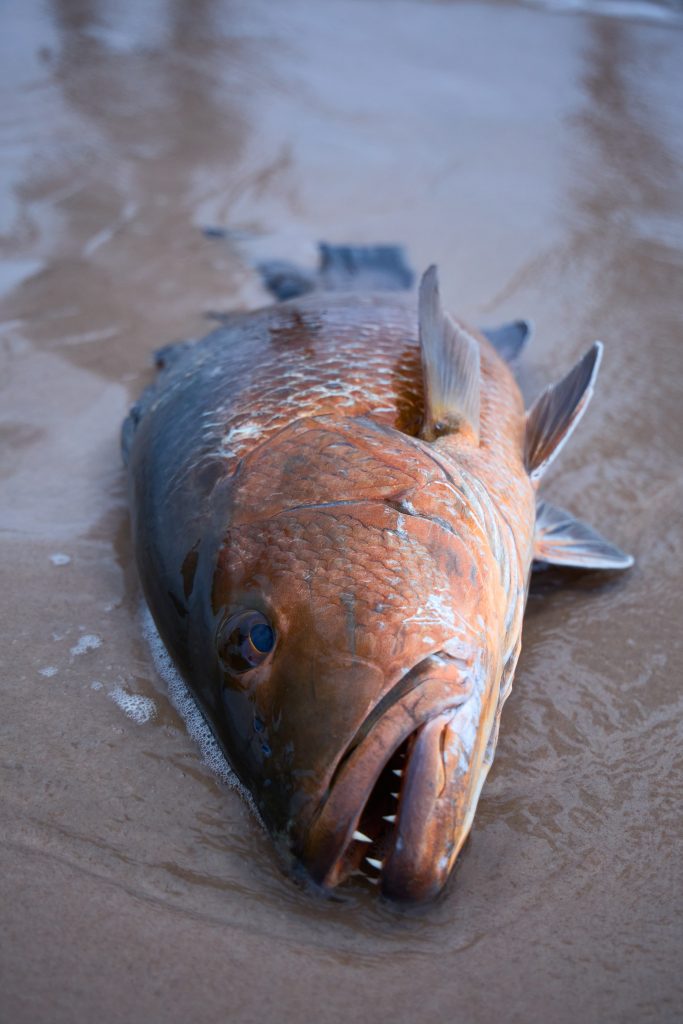
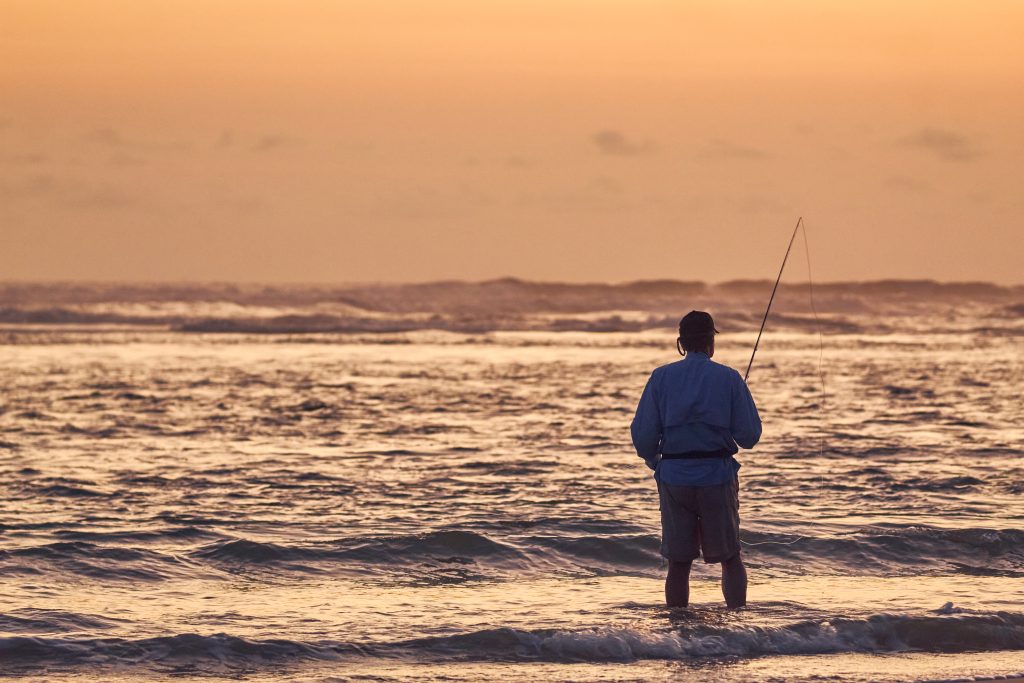
A couple of things worth noting here, particularly with reference to the point I made earlier about the nature of the Sette Cama operation. The way to get the most out of this fishing is to be flexible. If the guides suggest fishing what might seem unsociable hours, give it a go. It is not compulsory, and they will always accommodate you, but the nature of this fishery sometimes means sitting around in the lodge for a long time in the middle of the day and putting in the hours fishing early morning and late evening. This fishery also rewards the amount of effort that you put in. If you want to hook a tarpon the best way to do it is to be out there, after sunset and into the darkness casting away, cast after cast, into the rough water where the river meets the sea. It was noticeable that those in our party who spent the most time with their fly in the water during the evening sessions were the ones who caught the most fish.
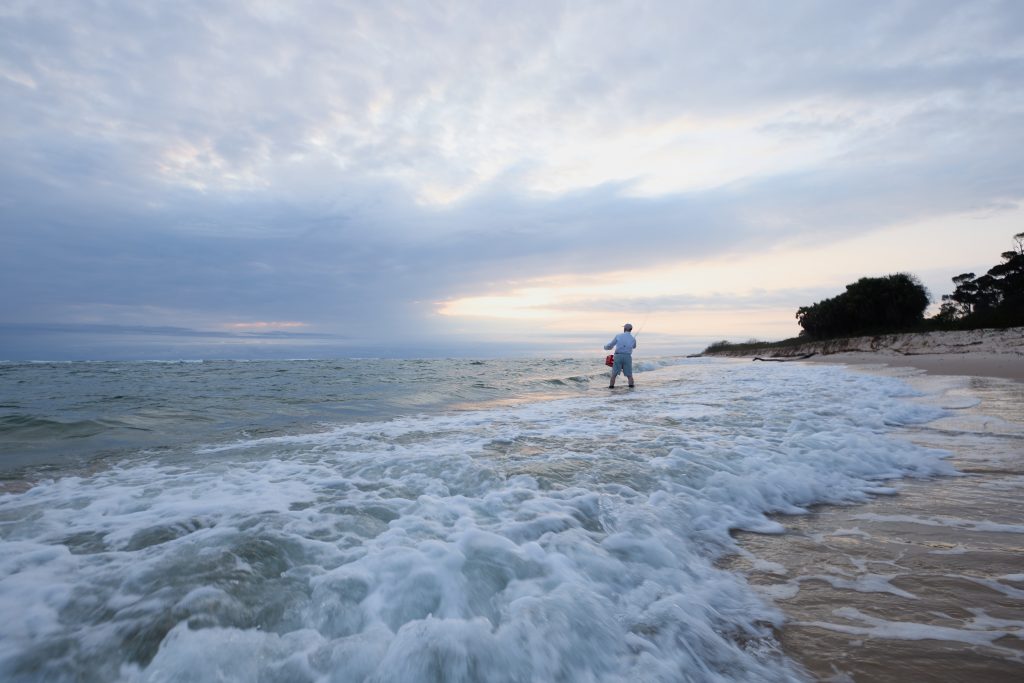
The next thing to mention is that if you are planning to visit Sette Cama I really recommend that you can double haul reasonably well. Finally, this trip is not all about fishing, so you can also skip sessions, take it at your own pace, or just concentrate on certain times etc. There is a lot more to this trip than just landing a big tarpon. We all loved the fishing in the late afternoon into sunset and darkness. We fished for an hour on arrival, usually landed a few fish, stopped for a beer or two as the sun went down and then wandered back to the water for an hour or two. If someone hooked a fish we all ran over to see what they had caught. One element we all loved was that sometimes you didn’t know what was on the end of your line until it was almost beaten. In summary, you can take this trip at your own pace and fish hard or have a more relaxing all-round experience.
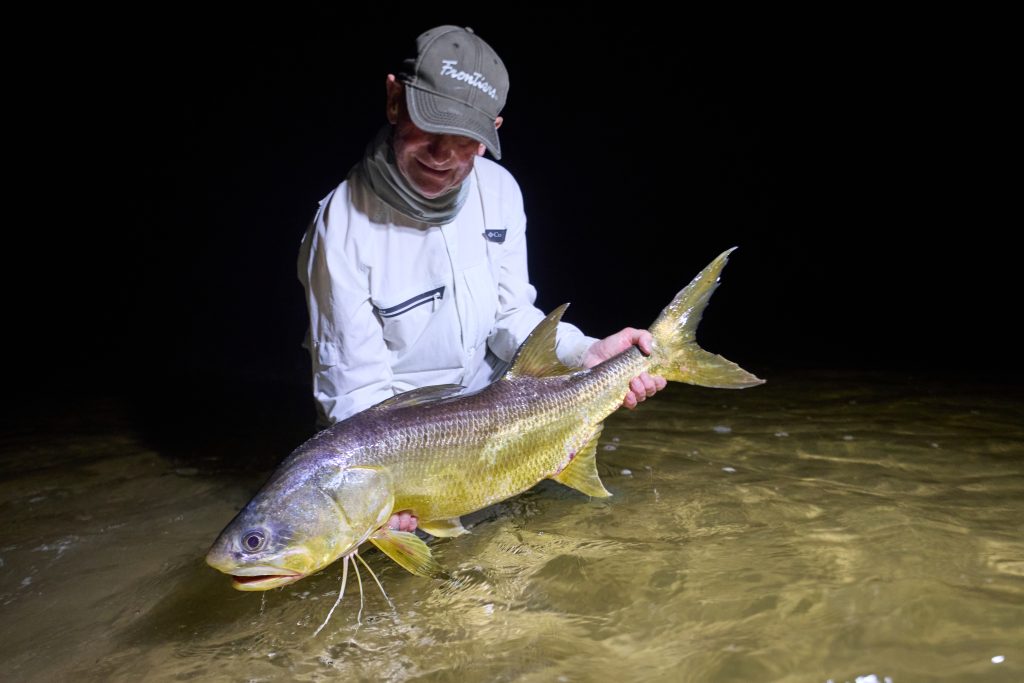
We were at the lodge for the last week of September. In theory, the rains should have come by then and the river should have risen. This would have flushed lots of bait fish out from the river into the sea, and the tarpon would have been a lot more active in the area we fished. Sadly, the rains were late and we didn’t see many tarpon. One member of the party jumped one, but it came off after a short fight. I imagine if you time it better it would be realistic to expect a landed tarpon for most people in the party but not multiple fish. However, we were very happy with the fish we caught and did not really worry about the absence of the big tarpon. Everyone caught lots of fish and the mainstay were the jacks, which are an incredibly hard fighting fish with often spectacular visual takes. My favourite catch was a Senegalese kob, a slightly different species from the kob found in South Africa.
Another point to note is that although it was warm the temperatures do drop, particularly early season, so it is important to bring a warm fleece and a waterproof jacket. If we had come later in the season there are times when you might be fishing in the rain a lot and it can become more humid. We had very pleasant fishing conditions, it was warm and quite overcast most days. Do remember that the fishing season at Sette Cama is during the rainy season and it can rain heavily at times, so the waterproof coat is an essential packing item.
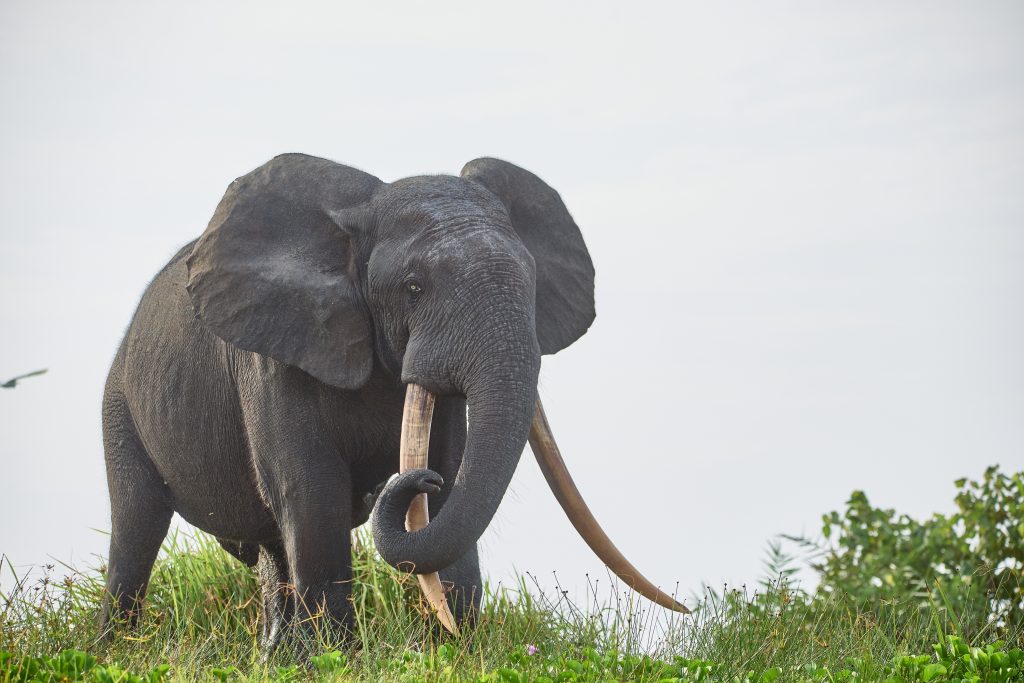
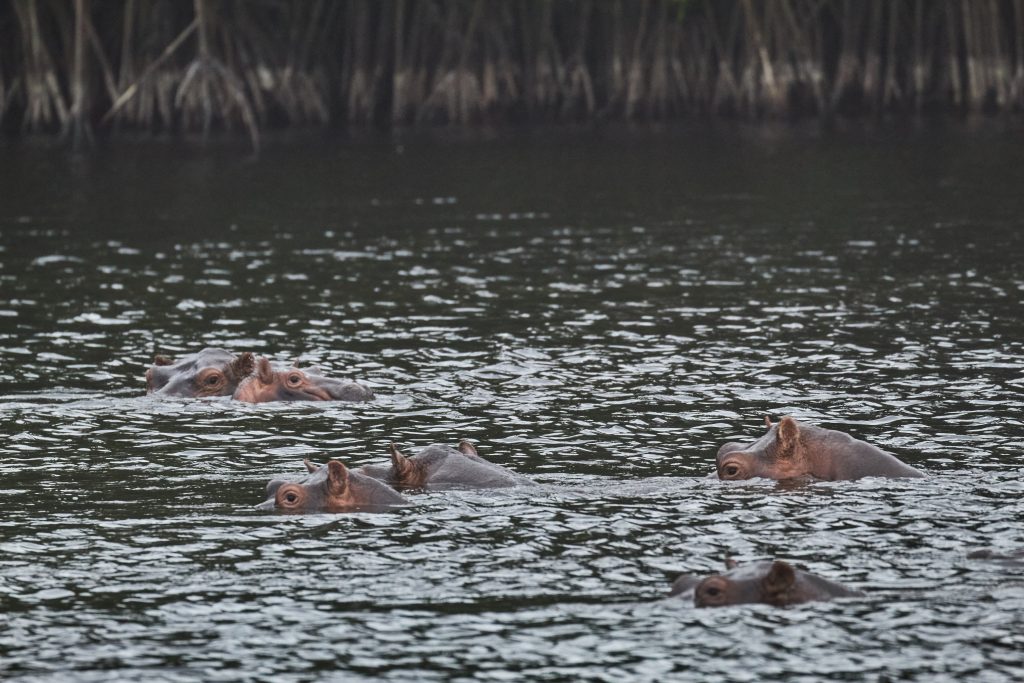
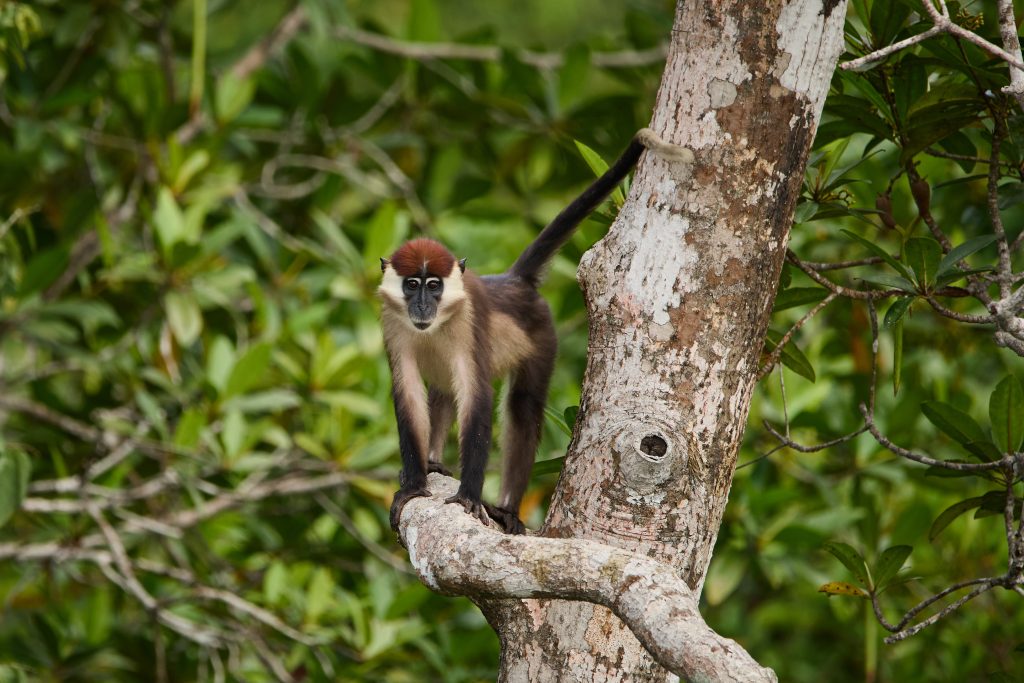
There are two excellent excursions that you can do at Sette Cama which I would really recommend. I did the forest walk which is a four-hour guided walk through the National Park. The forest is quite dense but there is a simple track and the walking is easy. We saw monkeys, duikers, amazing birds and insects. The highlight was a group of chimpanzees which we watched for several minutes. They were very difficult to see in the trees and canopy but we could hear them and caught glimpses as they jumped from tree to tree or climbed down onto the ground. This is a place to put your camera away and look intently. Each animal sighting is a glimpse that builds up into a picture of what is happening when you combine it with the sounds of branches breaking and creatures calling to each other. The second is a slightly longer walk. It is a beach walk to see the ‘surfing hippos. This is a phenomenon that is unique to this area. The hippos wade into the sea and then use the waves to ‘surf’ up or down the coastline to new areas to look for grazing. Then they surf back to their home area and walk back out of the sea to where they spend their days. You can combine this with fishing for baby tarpon and of course you will also see buffalo, red forest hogs, crocodiles and possibly elephants.
One of the strengths of this operation is the staff. There is a very friendly and efficient management couple who are always on hand. The guides are South Africans who although still young are as good as any guide I have fished with anywhere. Friendly, knowledgeable and experienced they know exactly what they are doing and are always worth listening to. There are also local Gabonese boatmen who are also very friendly and competent, although having a little French helps with communication. I was impressed at how we were always made to wear life jackets when we were moving in the boats. Little touches also made a difference, such as having real coffee in the boats, made fresh using a cafetiere and hot water from a flask.
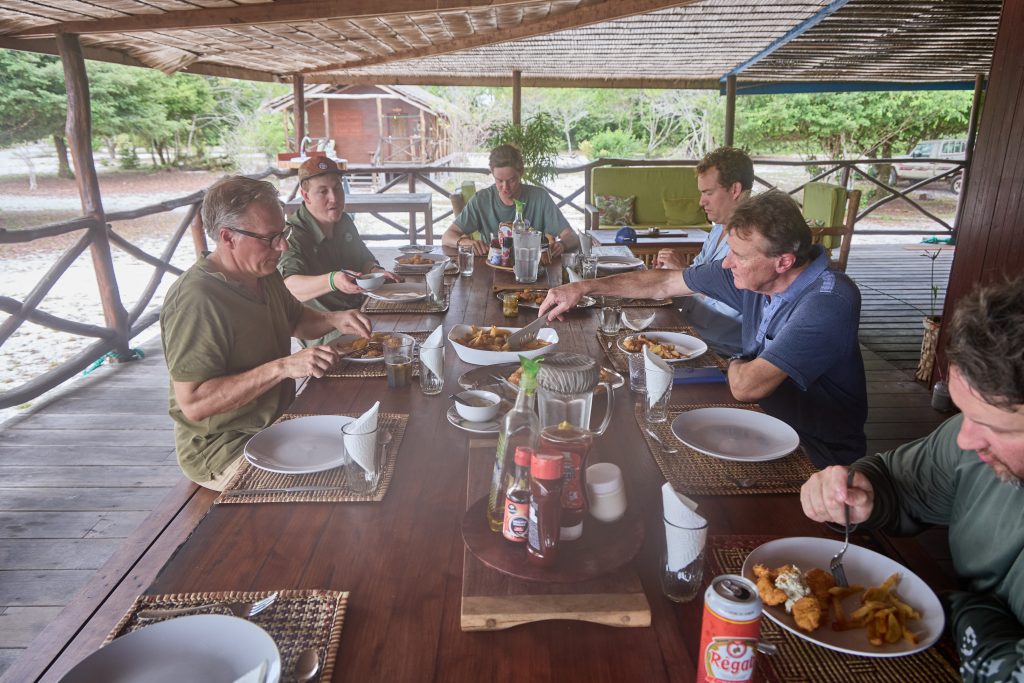
The lodge staff were all charming. The chef was a master at making omelettes when we returned from the morning fishing session. The food overall was good and very well prepared. The only downside was that due to the location supplies are quite limited, so fish became quite an important staple. However, we always had three courses at lunchtime with delicious French inspired puddings being a nice surprise, such as tarte tatin. Dinner was quite late and a lighter but still filling meal. The maximum number of rods is eight so there is a nice intimate group atmosphere at mealtimes when the managers, guides and fishers all eat together.
In summary, this is a trip I would recommend to anyone. If you want to experience a unique part of the world, catch different fish and see different flora and fauna, this is the place for you. It is easy to get to, stress free and will leave you with many amazing memories. One that stays with me is when, after finishing fishing at night, we shone our headtorches on the water which then exploded with panicking bait fish. The water was so full of life that we wondered how the fish ever picked our flies out. This trip will allow you to use the fishing knowledge that you have picked up along the years, but you will also learn, have new experiences and come away remembering something of the childhood wonder of exploring and fishing waters which hold something of the unknown. You might feel a shiver of excitement on arrival in Gabon as this is not just another fishing trip, it is a journey into one of the last wildernesses in Western Africa.
Photo credits: Thanks for African Waters guides David Taylor, Aiden du Toit and Chris King for the photographs.